


lawzie

MUSIC FOR WELLBEING

Twelve years ago, I was working in a care home for people living with dementia as a laundry assistant. The managers, knowing about my love for music, asked if I’d bring my guitar and sing with the residents. I was thrilled at the thought of creating something fun and meaningful for the people living in the home.
It was during this very first session that I really saw the impact of music for well-being in a care home setting. Residents who seemed distant and disengaged would light up when I started singing their favourite songs.
The impact of music for well-being became evident as I saw firsthand how music could revive spirits and bring joy.
Soon after that, I decided to start my own business, singing in various care homes and with children. This led to me being contacted by SEND schools, brain recovery charities and individuals whose loved ones had been affected by a stroke or dementia.
I absolutely love what I do and feel extremely lucky. At my core, the values I hold are compassion, connection and joy. My aim is to uplift!


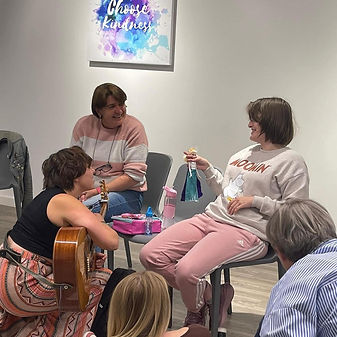
THE SCIENCE BIT
Music lights up various parts of the brain, which can be especially beneficial for individuals with dementia.
Research shows that music therapy can help with depression, enhance memory, and improve cognitive function. It’s no wonder that music therapy is celebrated for its transformative impact on mental well-being.
Research consistently shows that the impact of music for well-being extends beyond mere enjoyment. It can improve mood, reduce anxiety, and enhance overall mental health.

Music strengthens neural connections
Listening to or playing music activates multiple brain regions at once—auditory, motor, emotional, and even visual areas. This “whole‑brain workout” increases connectivity between neural networks, which supports better cognitive flexibility and long‑term brain health.
Music boosts memory through pattern recognition
Music engages the hippocampus, the brain’s memory centre. Because melodies and rhythms create predictable patterns, the brain uses them as anchors, making it easier to store and retrieve information. That’s why songs from years ago come back instantly.
Music reduces stress hormones
Research shows that music can lower cortisol levels and activate the parasympathetic nervous system. This shift helps the brain move out of “fight or flight” mode, improving emotional regulation, focus, and overall mental clarity.
Rhythm improves motor coordination
When you tap your foot or nod your head to a beat, your brain’s motor cortex syncs with the rhythm. This entrainment strengthens timing, coordination, and even gait—one reason music therapy is used to support people with Parkinson’s disease.
It triggers the brain’s reward system
Music releases dopamine—the same neurotransmitter associated with pleasure, motivation, and learning. This chemical boost not only feels good but also enhances attention and reinforces positive behaviors.
Contact
If you would like to know more, please get in touch! I aim to get back to message within two working days.

I’ve been doing this work for over a decade now. It all began in care homes, singing for elderly residents and people living with dementia. From there, things just kept growing. I launched a children’s music group called Little Rock Stars, which opened the door to singing in nurseries and SEND schools. That experience then led me to work with the brain‑recovery charity P.A.U.L, as well as SEND organisations like Unique Friends, Special Stars, and The Make It Shine Foundation.
I also work one‑to‑one with clients, including people who are rebuilding their speech after surviving a stroke.
Click the link below for a video of me in action!


